


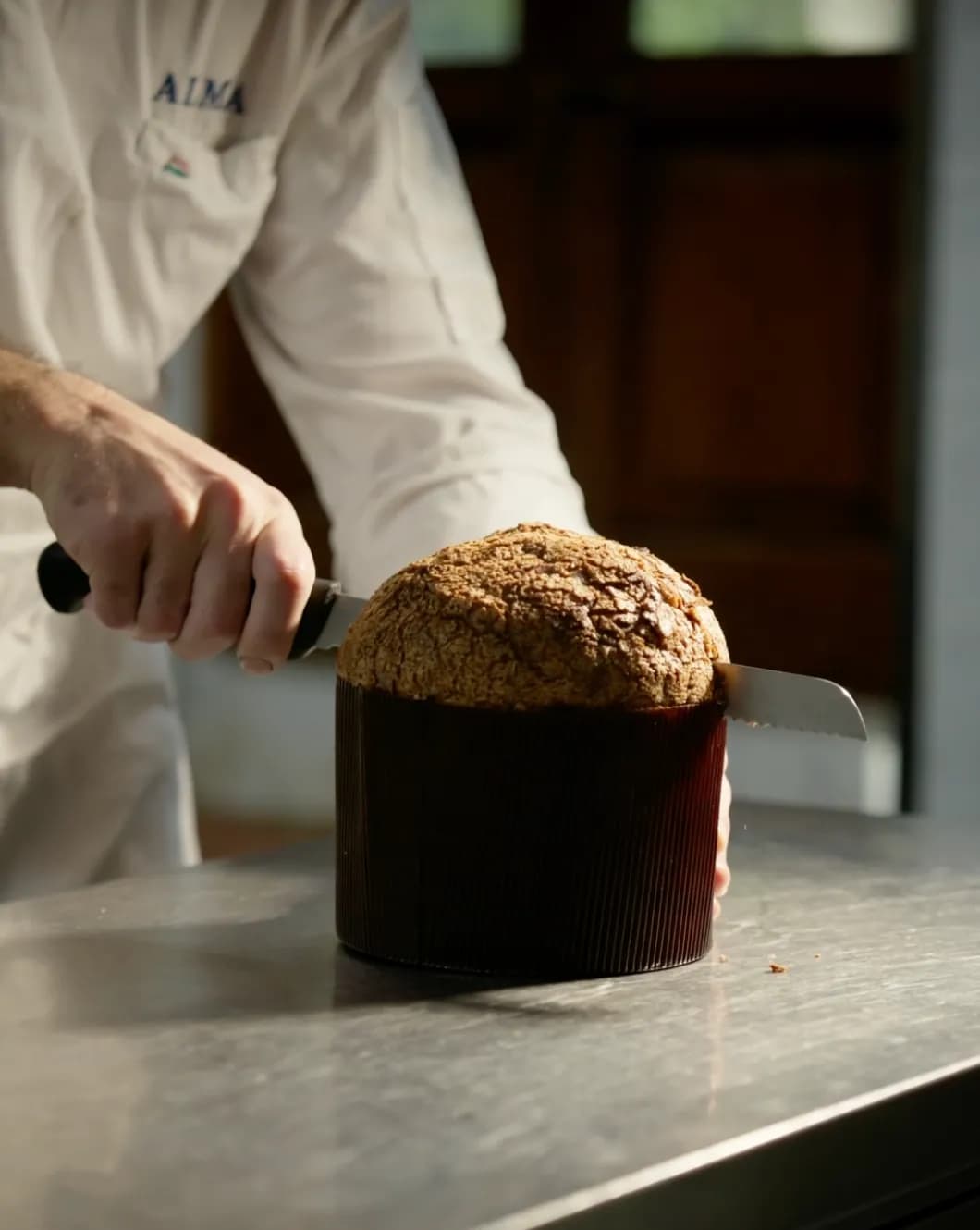
In December panettoni are everywhere, and at first sight they all look alike. Yet the difference between a good panettone and an ordinary one is huge: you can see it, smell it and above all taste it.
In the kitchen of San Bernardo Restaurant in Calci we make panettone by hand every winter. Here are the seven things we look for, and that you can look for too, to tell a good panettone before you even taste it.
1. Read the label: few ingredients, the right ones
A good panettone is made with flour, butter, egg yolks, sugar, natural leaven, candied peel and raisins. The shorter and clearer the ingredient list, the better.
Butter should be the only fat: other vegetable fats are a first warning sign. The same goes for emulsifiers, preservatives and added flavourings, which make up for what time and good ingredients did not do.
2. Time: a slowly leavened panettone
Panettone is above all a matter of time. A long leavening with sourdough starter develops aromas no flavouring can imitate and makes the crumb lighter and easier to digest.
Ours, for example, takes three days of work and about 13 hours of leavening. When a maker tells you their timings, it is usually a good sign.
3. The dome and the crust
Look at the shape: the dome should be high and well developed, a sign that the dough had the strength to rise. The crust is golden and even, dark but never burnt.
4. The aroma
As soon as you open it, a good panettone smells of butter, citrus and leavened dough. These are warm, natural aromas. If you smell an overly sweet, insistent vanilla instead, it probably comes from an added flavouring.
5. The crumb: it pulls apart in strands
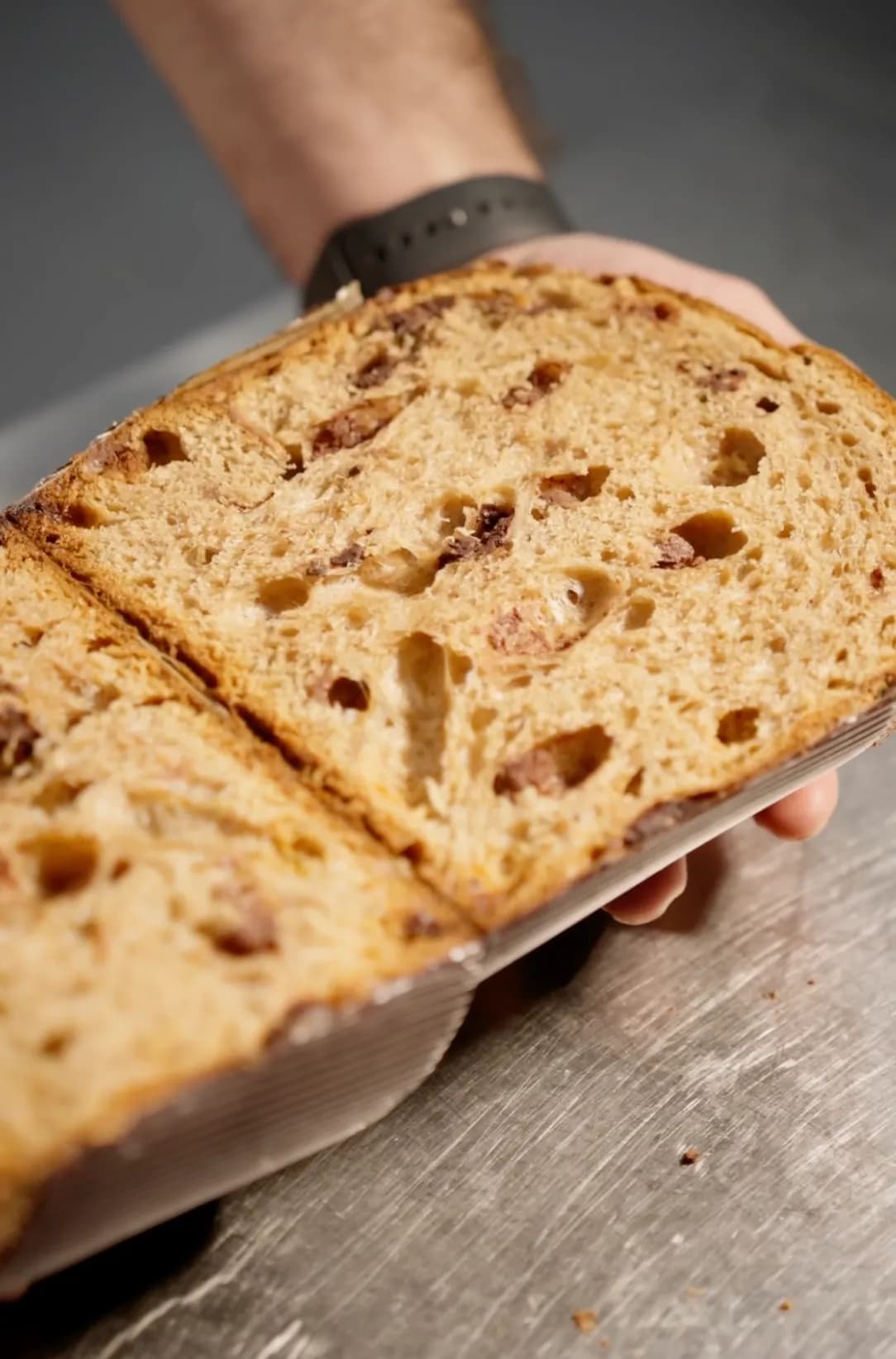
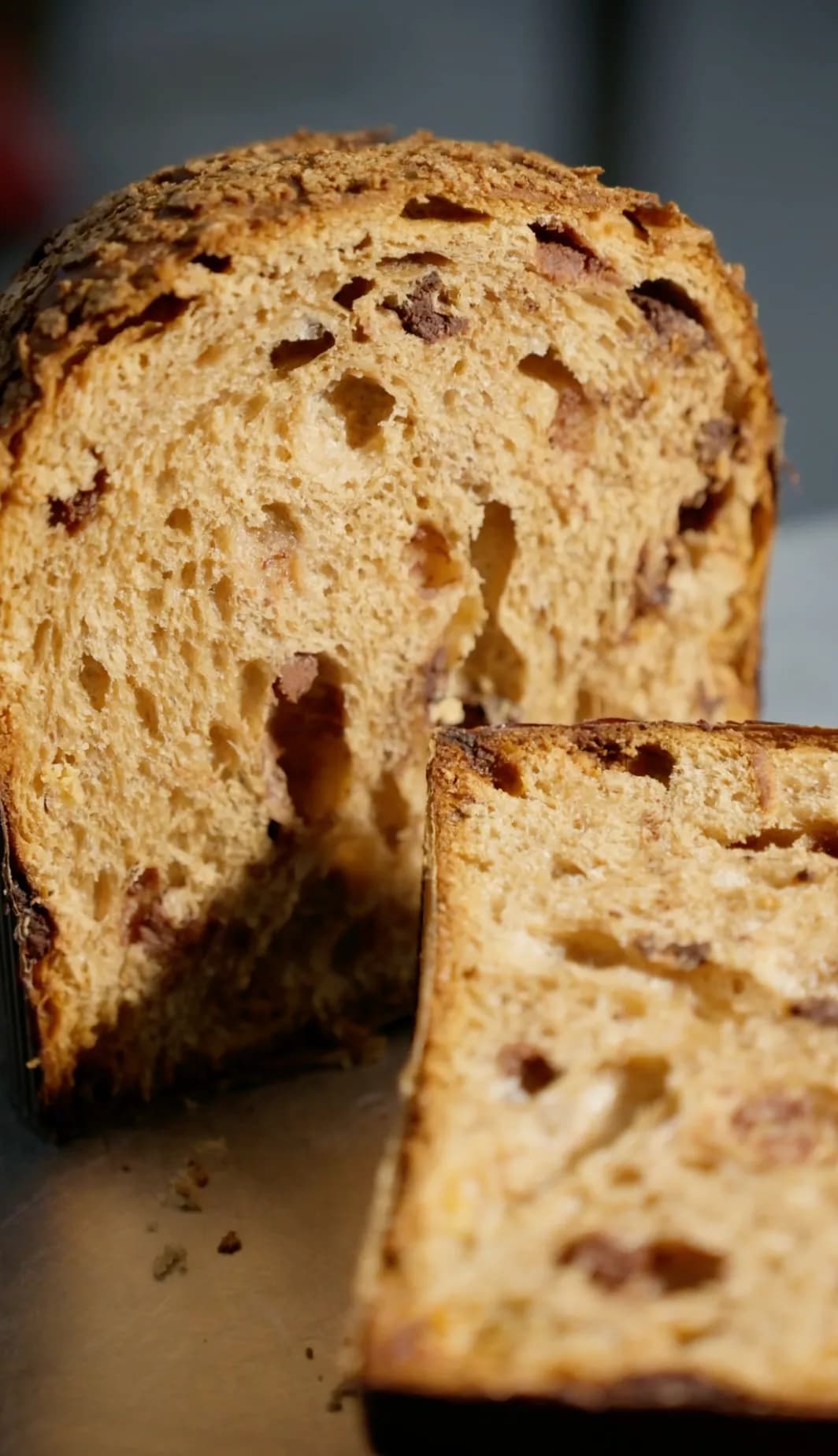
Cut a slice and look inside. The crumb of a good panettone is irregular, with holes of different sizes stretched upwards, a sign that the dough rose slowly and vertically.
Try pulling it with your fingers: it should come apart in long, soft strands, not crumble like a cake or stay compact like brioche.
6. Candied peel and raisins
This is where the biggest difference shows. The candied peel in a good panettone is soft and juicy, in recognisable pieces, and still tastes of fruit. Hard, rubbery or uniform tiny cubes are usually industrial candied fruit.
We make ours from Monte Pisano citrus, in several stages, so it keeps the juice and fragrance of the fruit. We prepare the raisins in our kitchen too: they should be plump, not dry.
7. On the palate: soft, moist, never dry
When you taste it, the crumb is soft and slightly moist, melts without sticking to your mouth and does not feel greasy. The flavour is balanced: sweet but not cloying, with butter and citrus lasting to the end.
San Bernardo's handmade panettone
Everything you have just read is how we work in Calci, a few kilometres from Pisa. To find out how our panettone is made and which flavours we have prepared for this Christmas, read San Bernardo's handmade panettone.
Frequently asked questions
How can you tell if a panettone is good?
By a short label with butter and natural leaven, an aroma of butter and citrus, an irregular crumb that pulls apart in strands, and soft, juicy candied peel.
What does slowly leavened panettone mean?
It means the dough had many hours to rise, usually with sourdough starter. Time develops the aromas and makes the crumb lighter; ours rises for about 13 hours, over three days of work.
Why does the candied peel matter so much?
Because it is the ingredient that most sets one panettone apart from another. Well-made candied peel is soft and tastes of fruit; industrial candied peel is often hard and sweet with no aroma.